


How a NYC Speech Therapist Uses Neuro-Affirming Care to Improve Communication Confidence in Selectively Mute Children
Johnny’s mom was shocked when she learned during the first parent-teacher conference night of the third grade that Johnny was not talking during the school day.
Johnny was not talking in class.
And Johnny was not talking in the lunchroom.
Johnny was not even talking on the playground.
Nope. Not a single word.
He was completely silent throughout the entire school day.
This is one of the situations where speech therapy for selective mutism in NYC can help children build communication skills and confidence in settings where speaking feels difficult.
Mom was very surprised!
In fact, she almost fell off her chair!
Johnny was extremely verbal at home.
Johnny loved telling his mom and little brother about his school day adventure when he came home each afternoon.
He frequently enacted his favorite scenes from K-Pop Demon Hunters while singing loudly and confidently for his whole family to hear!
Mom questioned the teacher for details.
“What do you mean Johnny is not speaking in class?”
“I’m so confused because he is a complete chatterbox and drama king at home.”

That’s when his teacher suggested they visit a speech-language pathologist for evaluation to figure out what was going on.
Getting Support from a Speech Therapist
That’s when Mom called me.
As a speech therapist in NYC, I came aboard to help support this highly intelligent and sensitive little boy.
Our goals were for him to communicate confidently in his home, school, and community.
Johnny came in for an initial speech consultation with me.
I could hear him laughing and talking with Mom in the waiting room as he read the books in my waiting room.
However, the moment I opened the door and invited him into my play space, he completely froze and went silent.
You could hear a pin drop.
I already had a feeling from the conversation with Mom on the phone that Johnny could be showing characteristics of a communication difference called selective mutism.
What is Selective Mutism (SM)?
Selective mutism is usually rooted in and perpetuated by anxiety loops around verbal and social communication behaviors required outside of the home.
A child’s ability to speak comfortably and easily at home is marked in contrast to the child’s minimal verbal output shown in certain social settings like at school or community gatherings.
What Causes Selective Mutism?
There is no singular cause of selective mutism.
Selective Mutism is considered a type of social anxiety that a child experiences when needing to communicate outside of the home.
Selective Mutism is a difference that can surface from a multitude of factors.
These factors can include:
- Shyness and introverted nature
- Social anxiety
- A present of expressive and/or receptive language differences
- A response to a traumatic event or series of extremely stressful events
According to the Diagnostic and Statistical Manual of Mental Disorders, 5th Edition, in order to be diagnosed with selective mutism, an individual must meet the following criteria:
- Absence of speaking in a social situation – in contrast to speaking often at home.
- This lack of speaking negatively affects the child’s educational success and social development with peers.
- The lack of speaking is beyond a limited timeframe – lasting over 4-6 weeks and consistently noticed in outside environments as compared to the child’s home environment.
- This lack of speech cannot be attributed to a lack of language required for social and educational participation.
- The disturbance is not better explained by a communication difference and does not occur exclusively due to another neurodevelopmental, psychiatric, or cognitive difference.
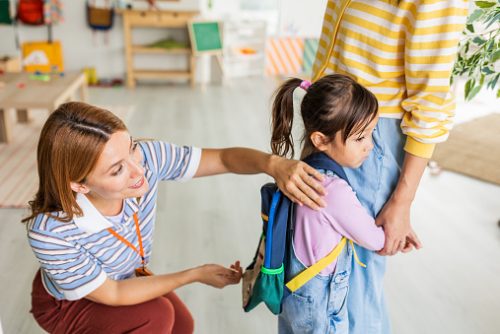
It is important to note that research has shown that children with a history of speech and language differences may be at a higher risk of developing selective mutism as a secondary and compensatory strategy for speaking and learning challenges.
This is one of the many reasons early and effective speech and language therapy is optimal for a child who is struggling to acquire the key developmental milestones.
How Does Selective Mutism Affect a Child’s Everyday Life?
Selective mutism commonly co-occurs with other forms of social anxiety.
A child who is diagnosed or suspected of having a communication difference like Selective Mutism can be deeply affected on a daily basis by their inability to speak in group settings.
This inability to speak in a group and unfamiliar setting can have a cascade of effects on the child’s development and inner wellbeing, sense of self, and confidence.
A Selectively Mute child may experience:
- Difficulty participating in the classroom
- Forming meaningful friendships with peers
- Engaging in play dates and after-school activities with peers
How Can a Neuro-Affirming Speech Therapist Help a Child with Selective Mutism?
A speech-language pathologist may work closely with a psychologist or neuropsychologist to diagnose and treat a child with selective mutism.
A selective mutism diagnosis can only be made by an experienced speech therapist or psychologist.
There is no singular cause of selective mutism.
It is a type of anxiety that presents itself during periods of social stress.
A child who is selectively mute may appear shy around others and experience anxiety during social situations.

Children with Selective Mutism may actively avoid speaking situations.
Over time, this feedback loop becomes reinforcing for the child’s nervous system.
It is also important to note that untreated expressive and receptive language concerns can lead to an increased risk of developing selective mutism. This happens as the child becomes frustrated and disengages from the outside.
What Does Neuro-Affirming Care Look Like in the Treatment of Selective Mutism?
Chatty Child’s treatment and care for a child with Selective Mutism is rooted in the principles of neuro-affirming and trauma-informed care.
My initial goals for a child with Selective Mutism are foundational and include:
- Building a feeling of complete safety and trust.
- Developing rapport and trust with the child.
- Engaging in Nervous System Regulation Activities.
- Finding out what interests and excites them.
- Learning about their likes and dislikes.
- Creating a space of trust, safety, and belonging.
- Creating spaces and activities for them that feel safe, calm, regulating, and secure.
These foundational steps should not be skipped.
These foundational pieces may even take some time to foster and build, and they are crucial for your child’s communication success and confidence.
Once those foundational elements of trust and safety have been built and secured, only then can we move to the next phase of treatment.
This next phase includes slowly building a child’s tolerance for speaking to others through the use of:
— Pretend role-playing games
— Turn-taking during cooperative games
— Art-making processes
— Dramatic storytelling
— Sensory play
— Imaginative and immersive exploration
and so much more!
Remember folks. Always focus on building connection and trust with your child first and foremost!
Please encourage, validate, and accept ALL communication forms.
ALL communication starts with regulation and connection FIRST!
Reach out for support. We are here to help your child become a confident communicator.
Sincerely,
Heather Lynn Boerner, MA CCC/SLP
Is your child extremely shy? Do they shut down verbally in social or academic contexts?
Chatty Child’s expert speech and language therapy may be the missing piece to the puzzle!
Working with a speech-language pathologist could be the support you’ve been looking for. Don’t hesitate to reach out to our experienced team of speech-language pathologists who can help create a tailored program for your neurodiverse learner.
We offer personalized neurodivergent affirming, speech, language, feeding, and occupational therapy, as well as creative mindfulness classes for all ages and abilities.
In-person and online options are available for all therapeutic sessions and classes.
Our speech and occupational therapists are here to support all your child’s therapeutic needs.
I invite you to schedule a tour to discover the support waiting for your child at Chatty Child.
We are here to help and support your child to grow and learn!
Let’s create excellent communicators, confident voices, calm minds, and limitless possibilities – together!
Neuro-Affirming Speech Therapy for Selective Mutism in NYC
At Chatty Child, we provide neuro-affirming support for children who experience selective mutism, focusing on communication confidence without pressure to speak.
- Contact us or call 347.491.4451 for a free 15-minute conversation about your child’s communication needs.
- Schedule a comprehensive evaluation to understand your child’s strengths and challenges across settings.
- Begin individualized speech therapy focused on building comfort and confidence with communication.
- Collaborate with your child’s support team to create consistent strategies across home, school, and other environments.
With the right support from a speech therapist, your child can develop greater confidence communicating while feeling respected and understood.
Whole-Child Speech, Feeding & Occupational Therapy Services in NYC
At Chatty Child, we help children build the communication, learning, and social-emotional skills they need to participate more confidently at home, school, and in their communities. Our whole-child approach recognizes that communication is closely tied to learning, connection, independence, and self-esteem.
Our services include:
- Speech Therapy – Personalized, play-based therapy supporting speech and language development, social communication, clarity, and confidence.
- InterAct – Storytelling and play-based sessions designed to encourage language, creativity, connection, and shared experiences.
- Mindfulness classes for all ages – Mindfulness and meditation-based classes that support emotional, sensory, and self-regulation.
- Occupational Therapy – Support for sensory needs, motor skills, independence, and everyday self-care routines.
- hum studios – Compassion- and mindfulness-focused classes that encourage emotional awareness, regulation, and accessibility for children of all ages.
- Teletherapy – Convenient virtual speech and occupational therapy available across New York State.
- Tutoring – Individualized academic support for reading, writing, comprehension, and critical thinking.
- Functional Nutrition – Nutrition-informed strategies that can support regulation, attention, development, and overall well-being.
- Consulting – Practical guidance for parents, caregivers, and educators to create consistent support across settings.
- Group Programs – Small-group experiences that encourage communication, social connection, and emotional development through supported peer interaction.
Meet Heather Boerner, Pediatric Speech-Language Pathologist in NYC
Heather Boerner, MA, CCC-SLP, is a licensed, nationally certified speech-language pathologist with 23+ years of pediatric experience. Her work combines mindfulness training, trauma-informed care, and a neuro-affirming, whole-child approach shaped in part by her own experience as a neurodiverse, differently-abled individual.
Heather founded Chatty Child Speech, Occupational & Physical Therapy, PLLC to provide creative, collaborative, individualized care. She partners with schools through observations and team meetings and is also the author of Carrie the Colorful Chameleon, a children’s book promoting confidence, curiosity, and connection.
Heather and her team offer in-person therapy at their Tribeca clinic and virtual services throughout New York State, helping children develop communication, confidence, and self-advocacy skills.
