


How Mindfulness Can Help Neurodiverse People to Thrive: A Neuro-Affirming Perspective & Conversation with Dina Kaplan, Founder of The Path
My meditation and mindfulness training teacher and friend, Dina Kaplan, was recently named one of the Top 25 Meditation teachers in the world!
I had the pleasure of completing The Path’s ™ Meditation Teacher Training (MTT) course.
Dina created this amazing 150 hour teacher training course, which discusses Buddhist history and wisdom, along with the technicalities of guiding meditation sessions successfully.
This approach shares important values with neurodiverse affirming speech therapy in NYC, including autonomy and self-acceptance.
This training in mindfulness definitely exceeded all my expectations.
I have personally practiced meditation and mindfulness since I was a teenager and have enjoyed its many benefits as a neurodiverse person.
The Path’s Meditation Teacher Training (MTT) course gave me the skills to develop mindfulness techniques for both children and adults within my speech-language pathology practice, Chatty Child. We incorporate concepts of mindfulness, presence, compassion, and empathy.

As a speech therapist in NYC, I have found mindfulness practices to greatly benefit the neurodiverse populations I work with – as well as myself personally – for sure!
Here is a recent conversation I had with Dina about how and why I have found the Path’s MTT course on teaching mindfulness to others so inspiring and effective!
Dina and I discuss the benefits of a daily meditative practice for the neurodiverse populations.
Dina: Why is it important to include lessons and tips for teaching mindfulness specifically for neurodiverse people?
Heather: Well, first, because many people are neurodiverse, and they might be attending one of your classes
As a neurodiverse person myself, I have personally benefited from the positive effects and outcomes of a daily meditation practice for decades. I thought it was about time to share this gift with others!
Discovering the Power of Presence Through Mindfulness
I did a fateful Google search back in 2024 and found your amazing 150-hour MTT teacher training course. Additionally, I found a beautiful collection of like-minded practitioners within The Path community that followed!
I believe teaching people that are differently-abled mindfulness techniques is one of most self-empowering regulation tools you can teach.
Mindfulness helps to improve both their physical and emotional self-regulation skills.
I have found that meditation and mindfulness practices can help teach a person how to regulate their own nervous system. They do this by bringing their attention to the present moment.
What I love about mindfulness practices is that they can provide an avenue for a person to regulate their own nervous system!
I realized again and again throughout the training that mindfulness can provide a child (or adult) with clear agency and choice over their own bodies and nervous systems. This is a beautiful and an extremely neuro-affirming practice!
In my mindfulness classes that I created for children at my clinic Chatty Child, I am continually amazed and astounded by the power of presence and the simple attention to breath.
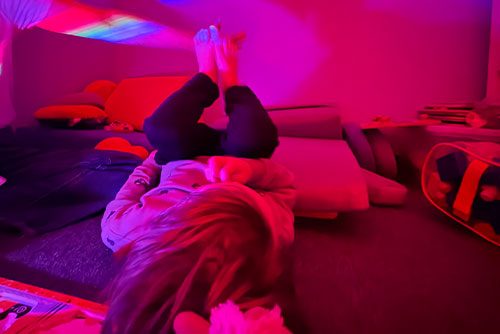
By teaching a child the power of bringing their attention to their breath, their sensory and nervous systems learn over time how to self-regulate.
Mindfulness Activities That Foster Growth and Connection
Using these mindfulness techniques can be game-changing when a child is overstimulated or overwhelmed!
Also, teaching a child mindfulness techniques to clear the mind is extremely helpful for some children who may be experiencing racing thoughts, anxiety, or fears.
One of my most beloved mindfulness activities involves teaching children about empathy and gratitude.
In my speech pathology practice, we are often working to bolster a child’s language skills.
We are continually working on improving a child’s ability to take another person’s perspective.
Additionally, we encourage and guide reciprocity. This includes things like sharing, giving, and compromise during play and conversations.
Mindfulness practices teach similar concepts, like cultivating gratitude and building empathy for all living things.
Buddhist teachings invite us all to live with mindfulness in peace, love, and harmony with all living things.
One of my favorite springtime activities involves collecting and painting rocks that the children take home and use for their daily gratitude practices.
Every year, I invite each child to find a perfect rock, paint it beautifully, and then use it each morning or night in their daily gratitude practices.
I encourage each child to hold the rock in their hands, close their eyes, and name 3-5 things that they are grateful for (big or small).
Most recently, I have even incorporated mindfulness techniques with both my children and adult clients who struggle with dysfluent speech.

Again, I have been amazed at the power of mindfulness with these clients as well. I have noticed improved fluency as they learn to anchor into the calming rhythm of their own breath.
Accessible Mindfulness for Neurodiverse Learners
I am beginning to think mindfulness is the answer to everything (just maybe!)
Dina: What is 1 powerful step mindfulness teachers can take that would help neurodiverse people when they start meditating or to go further in their personal practice?
Heather: I think one of the most misunderstood things about meditation and mindfulness is that you must look like a Buddha statue, sitting on the mountaintop in perfect cross-legged lotus position with your eyes closed and silently chanting in your head.
How many people have that ‘perfect picture’ of meditation in their mind, right?
The truth is, you can be mindful and meditate anywhere!
I would invite beginning and advanced meditators alike to let go of any predetermined ideas they may have of meditation and mindfulness.
Encourage each student to start practicing mindfulness in small moments and increments throughout their day.
I invite us all to consider that …
Meditation doesn’t need to look or be perfect.
It can look downright messy.
Meditation can happen while you are in motion – just not driving – please!
You can meditate with your eyes open or closed.
Also, you can meditate while sitting, standing, walking, or washing your clothes!
The truth and reality is meditation can be extremely accessible – if you let go of that perfect picture in your mind.
Supporting Agency Through Neurodiverse Affirming Therapy
Mindfulness can be a valuable tool for both students and teachers alike.
As a meditation teacher, I would invite each student to meditate in whatever position or activity feels comfortable for them.
Dina: What is the danger for a meditation teacher who is not skilled in teaching mindfulness to differently-abled people?
Heather: I would say that meditation is a very holistic, gentle, safe approach for differently-abled people.
I believe the overall ‘danger’ you risk is that the person may not enjoy or continue the meditation practice itself.
This is what I see a lot of – people coming into my clinic and saying, “Ms. Heather – I can’t meditate – I have too much energy!”
Another common scenario looks like this …
A person goes into a meditation class.
They can’t close their eyes.
Or they feel restless or agitated.
They think this mindfulness stuff is not for me!
Well, I might invite them to examine that thought …
I might try a walking meditation with them – adding some movement to the mindfulness.
Or I might use a breathing ball for more tactile and visual cues.
I might use sand or a rock table to encourage mindfulness while creating or playing in motion.
So really, the danger lies in that a student may reject or abandon a meditation and mindfulness practice – simply out of pure frustration.
And these mindfulness techniques could be life-changing for that person’s sensory and nervous systems, if trained using neuro-affirming techniques.
Mindfulness Practices as a Tool Towards Self-Regulation
As a person learns to listen to the internal signals of their body, they can incorporate mindfulness and somatic practices before their body reaches a point of overwhelm.
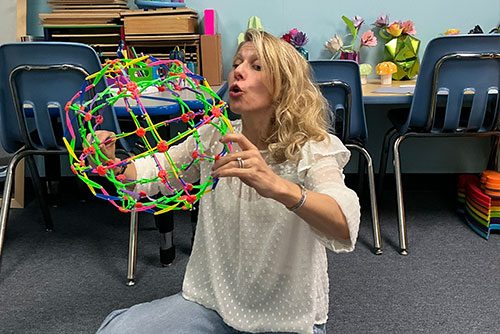
Of course, this takes practice and guidance from a trained practitioner. But the results can be very effective if done with care and a knowledgeable practitioner.
Experience Neurodiverse Affirming Therapy & Mindfulness at Chatty Child
Yes, it is extremely important as a meditation practitioner and professional to learn about techniques that will be helpful, affirming, and validating for all those differently abled students in your class.
By taking these positive steps, you take part in creating a more accessible meditation class and practice for all your students.
Thank you so much, Dina, for taking the time to chat with me today about the benefits of mindfulness in the differently-abled community.
I’m excited to keep teaching the world about the benefits and practical tools of meditation and mindfulness – with you, my friend, Dina!
Come check out one of Chatty Child’s neurodiverse affirming speech therapy or mindfulness classes. We would be thrilled to welcome you!
We can also travel to your child’s school for a professional development day for hands-on teacher and student mindfulness training.
Learn more about hum studios ™ mindfulness classes and professional development days.
Sincerely,
Heather Lynn Boerner, MA CCC/SLP
Could your child benefit from emotional, sensory, or self-regulation work?
Chatty Child’s meditation and mindfulness classes can help!
We offer personalized neurodivergent affirming, speech, language, feeding, and occupational therapy, as well as creative mindfulness classes for all ages and abilities.
In-person and online options are available for all therapeutic sessions and classes.
Our speech and occupational therapists are here to support all your child’s therapeutic needs.
I invite you to schedule a tour to discover the support waiting for your child at Chatty Child.
We are here to help and support your child – grow and learn!
Let’s create excellent communicators, confident voices, calm minds, and limitless possibilities – together!
Begin Neurodiverse-Affirming Speech Therapy in NYC at Chatty Child
At Chatty Child, we support children in building communication, regulation, and confidence in a way that honors neurodiversity and the whole child. If your child is struggling, here is how to get started:
- Contact us or call 347.491.4451 for a free 15-minute conversation about your child’s needs and neurodiverse affirming speech therapy in NYC.
- Schedule a comprehensive evaluation to understand your child’s communication, learning style, and regulation.
- Begin individualized speech therapy sessions using neuro-affirming, mindfulness-informed strategies focused on communication, regulation, and self-expression.
- Collaborate with your child’s care team through ongoing communication and shared strategies across home and school.
Your child doesn’t need to mask or struggle alone. With support from our team, they can build communication skills that feel natural, supported, and sustainable.
Our Approach & Services at Chatty Child in NYC
At Chatty Child, we support children in developing the communication, cognitive, sensory, and social-emotional skills they need to feel confident and capable across home, school, and community settings. Our whole-child approach recognizes that language, learning, relationships, and emotional regulation are deeply interconnected.
Our Services Include:
- Speech Therapy – Individualized, play-based support for language development, speech clarity, social communication, and everyday confidence.
- InterAct – A storytelling and play-centered program that strengthens language, imagination, and connection through shared narrative experiences.
- Occupational Therapy – Support for sensory processing, motor development, and independence in daily routines and self-care skills.
- Hum Studios – Mindfulness and compassion-based classes that foster emotional awareness, regulation, and accessibility for children of all ages.
- Teletherapy – Flexible virtual speech and occupational therapy services available throughout New York State.
- Tutoring – Personalized academic support focused on reading, writing, comprehension, and critical thinking skills.
- Functional Nutrition – Developmental support strategies that use nutrition-informed approaches to support regulation, attention, and overall well-being.
- Consulting – Collaborative guidance for parents, caregivers, and educators to support consistency across home, school, and community environments.
- Group Programs – Small-group sessions that build communication, social interaction, and emotional skills through guided peer engagement.
Meet Heather: Neurodiverse-Affirming Speech Therapist in NYC
Heather Boerner, MA, CCC-SLP, is a New York-licensed and nationally certified speech-language pathologist with more than 20 years of experience supporting pediatric communication development. Her clinical work integrates evidence-based practice with mindfulness, trauma-informed care, and a neurodiversity-informed lens.
She is the founder of Chatty Child Speech, Occupational & Physical Therapy, PLLC, where she provides individualized support to help children strengthen communication, confidence, and functional daily skills. Heather is also the author of Carrie the Colorful Chameleon, a children’s book centered on identity and self-expression.
She offers in-person therapy in Tribeca and virtual services across New York State, supporting children in building practical communication skills and greater confidence across everyday settings.
